
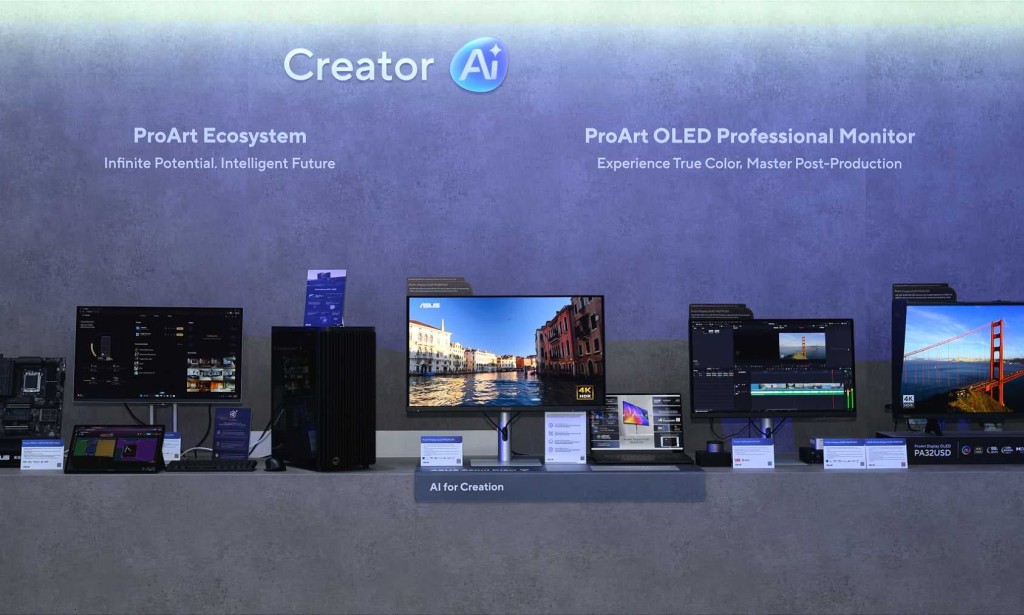
ASUS came to Computex 2026 with one of the largest and most varied product lineups the company has shown at the event in years. From creator laptops running a brand new AI superchip to slim Copilot+ notebooks for everyday users, here is a complete breakdown of everything ASUS announced on June 1.
The most significant announcement from ASUS at Computex is the ProArt P16 and ProArt P14 the first creator laptops ASUS has built on NVIDIA RTX Spark.
RTX Spark is a new platform from NVIDIA that combines an NVIDIA Blackwell RTX GPU with 6,144 CUDA cores and fifth-generation Tensor Cores with FP4 precision, connected through NVIDIA's NVLink-C2C chip-to-chip interconnect to a high-performance 20-core NVIDIA Grace CPU. The result is a unified architecture specifically designed for running advanced AI workloads entirely on the device itself, without depending on cloud servers.
The AI performance figures ASUS is quoting are significant: up to 1 petaflop of AI compute and up to 128GB of unified memory. That level of local AI processing capacity has previously required desktop workstations. Bringing it into a slim laptop form factor with ASUS claiming all-day battery life from the ARM-based Grace CPU's power efficiency is the central engineering achievement of this product.
The ProArt P16 and P14 feature ASUS's new Lumina Pro OLED display, which delivers up to 1,600 nits of HDR peak brightness, 120Hz refresh rate with Variable Refresh Rate support, and an anti-glare coating that addresses one of the most consistent criticism of OLED laptop panels in direct light. ASUS says the Lumina Pro display offers higher brightness, smoother refresh, and less glare than previous ProArt OLED panels.
ASUS has integrated exclusive ProArt Creator Hub software with local AI generative workflows and AI agents optimized specifically for this hardware. Both models are available in Neo White and Nano Black colorways. The ProArt Mini PC, running the same RTX Spark platform, was also announced alongside the laptops.
Availability for the ProArt P16, P14, and Mini PC begins in fall 2026 in select regions. Pricing has not been confirmed yet.
Zenbook 14 Up to 21 Hours of Battery and Three Platform Options
The new Zenbook 14 is ASUS's flagship everyday ultrabook for 2026. It is available with Intel, AMD, or Snapdragon processors, making it one of the few laptops to offer all three major platforms in a single chassis. The Snapdragon variant qualifies as a Microsoft Copilot+ PC with up to 45 TOPS of NPU performance for on-device AI acceleration.
The chassis weighs 1.1kg and uses a Ceraluminum cover a material that combines ceramic hardness with aluminium's light weight in new color options including Arctic Blue and Komodo Coral. Battery life is rated at up to 21 hours with fast charging supported through an all-in-one adapter. The display is an OLED panel with a high refresh rate and a slimmer bezel design than the previous generation.
Vivobook S Series Snapdragon-Exclusive Copilot+ Notebooks
The updated Vivobook S14 and S16 are powered exclusively by Snapdragon X processors. Both are Copilot+ certified, meaning they support Microsoft's on-device AI feature set including Recall, live captions, and AI image generation through Windows Studio Effects. ASUS is positioning the Vivobook S as the practical, more accessible route into Copilot+ computing for buyers who do not need the full ProArt or Zenbook premium.
Like the Zenbook 14, the Vivobook S models feature slim all-metal chassis designs and are aimed at students and everyday users who want AI-powered productivity without flagship-level pricing.
ASUS Pad, V-Series Desktops, and the Zenni Claw
Beyond laptops, ASUS announced a new ASUS Pad tablet and refreshed V-series desktop computers, both following the same AI-first approach as the laptop lineup. The Zenni Claw AI assistant device was also introduced a dedicated hardware interface for running ASUS's AI agents in home and family PC environments.
The V-series desktops use the latest Intel and AMD desktop processors with improved NPUs for local AI tasks, targeting families and small offices who need more computing power than a laptop provides without the complexity of a workstation.
What RTX Spark Actually Changes
Every major AI PC announcement for the past two years has involved Copilot+ features, NPU scores, and local AI processing most of which remain, for most users, features they use occasionally if at all. The ProArt P16 and P14 are different in scope. One petaflop of AI compute and 128GB of unified memory in a portable device points toward genuinely professional AI workflows large model inference, real-time AI video processing, local generative AI for video editing and 3D rendering tasks that currently require cloud resources or desktop hardware.
Whether that level of local AI capability becomes something everyday creators genuinely rely on depends on how software developers build for the RTX Spark platform over the next year. ASUS and NVIDIA's bet is that they will.

You must be logged in to post a comment.