
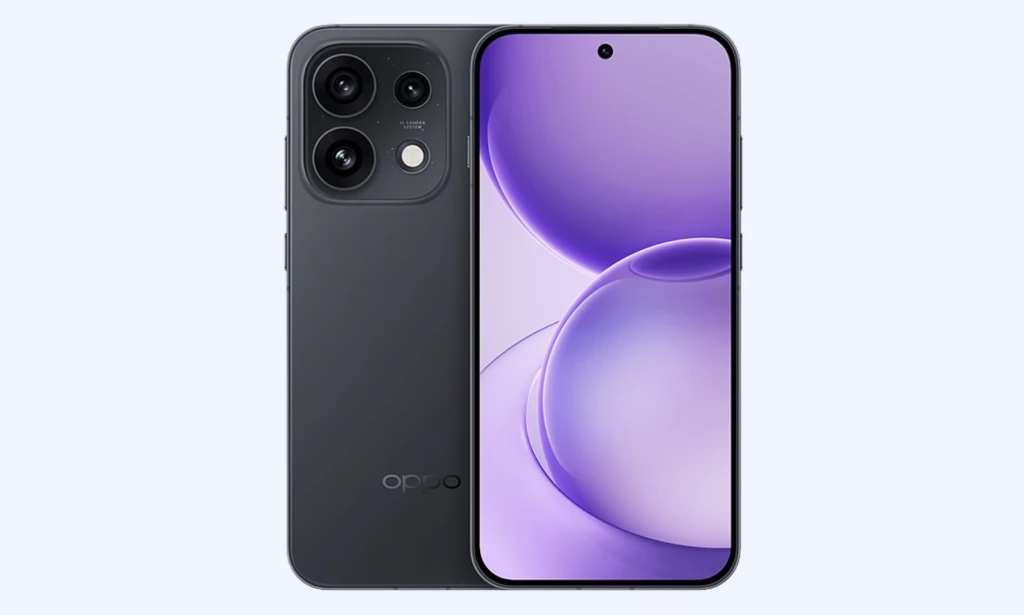
OPPO's Reno 16 series has always been about delivering more camera than the price suggests. The Oppo Reno 16 continues that tradition with its most aggressive camera hardware yet, 200MP main sensor with OIS, a proper 3.5x periscope telephoto lens at 50MP, and a 50MP ultra-wide, all backed by a 6,700mAh silicon-carbon battery and 80W fast charging. Launched in China on May 25, the Reno 16 positions itself as one of the most complete mid-range camera phones of the year.
Here is a thorough breakdown of every specification, every feature, and every genuine strength and limitation of the OPPO Reno 16.
Complete Specifications
Launch
| Detail | Info |
|---|---|
| Announced | May 25, 2026 |
| Released | May 29, 2026 (China) |
| Global Launch | Expected June to July 2026 |
Pricing
| Configuration | Price (China) |
|---|---|
| 12GB / 256GB | CNY 2,699 (~$370) |
| 16GB / 256GB | CNY 2,999 (~$410) |
| 16GB / 512GB | CNY 3,299 (~$450) |
| 16GB / 1TB | CNY 3,699 (~$505) |
Body and Build
| Detail | Info |
|---|---|
| Weight | 188g / 191g (variant dependent) |
| Build | Glass front, aluminum frame, glass back |
| SIM | Nano-SIM + Nano-SIM (Dual SIM) |
| IP Rating | IP68 / IP69 (dust tight; water resistant up to 2m for 30 minutes; high-pressure water jets) |
| Colors | Black, Purple, White |
| Thickness | 8.2mm |
Display
| Detail | Info |
|---|---|
| Size | 6.32 inches |
| Type | AMOLED, 1 billion colors, HDR10+ |
| Resolution | 1216 x 2640 pixels (~460 ppi) |
| Aspect Ratio | 19.5:9 |
| Refresh Rate | 120Hz |
| PWM Dimming | 3840Hz |
| Peak Brightness | 3,600 nits |
| Color Depth | 10-bit |
| Protection | Reinforced glass |
Chipset and Performance
| Detail | Info |
|---|---|
| Chipset | MediaTek Dimensity 8500 (4nm) |
| CPU | Octa-core: 1x3.4 GHz Cortex-A725 + 3x3.2 GHz Cortex-A725 + 4x2.2 GHz Cortex-A725 |
| GPU | Mali-G720 MC8 |
| RAM | 12GB / 16GB |
| Storage | 256GB / 512GB / 1TB UFS |
| Storage Expansion | Not supported |
| OS | Android 16 with ColorOS 16 |
Rear Camera System
| Lens | Detail |
|---|---|
| Main | 200MP, f/1.8, 24mm, 1/1.56-inch sensor, PDAF, OIS |
| Telephoto | 50MP, f/2.8, 85mm, 3.5x optical zoom, PDAF, OIS |
| Ultra-wide | 50MP, f/2.0, 16mm, 116-degree FOV, Autofocus |
| Color Spectrum Sensor | Yes |
| Flash | LED |
| Video | 4K at 30fps / 60fps, 1080p at 30/60/120/240fps, gyro-EIS, HDR |
Front Camera
| Detail | Info |
|---|---|
| Sensor | 50MP, f/2.0, 18mm, 100-degree FOV, Autofocus |
| Video | 4K at 30fps / 60fps, 1080p at 30fps / 60fps, gyro-EIS, HDR |
| Features | Panorama, HDR |
Battery and Charging
| Detail | Info |
|---|---|
| Capacity | 6,700mAh silicon-carbon |
| Wired Charging | 80W SuperVOOC |
| Other Charging Standards | 55W PPS, 44W UFCS, 13.5W PD |
| Reverse Wired Charging | Yes |
| Wireless Charging | No |
Connectivity
| Detail | Info |
|---|---|
| 5G | SA/NSA |
| Wi-Fi | Wi-Fi 6 (802.11 a/b/g/n/ac/ax), dual-band |
| Bluetooth | 5.4, aptX HD, LHDC 5 |
| NFC | Yes |
| Infrared | Yes |
| GPS | GPS, GLONASS, Galileo, BeiDou, QZSS |
| USB | USB Type-C 2.0, OTG |
| Radio | No |
Security and Sensors
| Detail | Info |
|---|---|
| Fingerprint | In-display optical |
| Sensors | Accelerometer, gyro, proximity, compass |
Audio
| Detail | Info |
|---|---|
| Speakers | Stereo speakers |
| 3.5mm Jack | No |
Design and Build Quality
Oppo Reno 16 continues OPPO's clean mid-range aesthetic with a glass front, aluminum frame, and glass back. At 8.2mm thick and 188 to 191 grams depending on the storage variant, it is comfortable to hold and sits within normal weight expectations for a phone carrying a 6,700mAh battery.
The standout build feature is the dual IP rating. IP68 certifies resistance to water immersion up to 2 meters for 30 minutes, and IP69 adds protection against high-temperature, high-pressure water jets. This combination is uncommon in the mid-range segment and gives the Reno 16 a meaningful durability advantage over most phones at this price. Three color options are available: Black, Purple, and White. There is no microSD card slot.
Display
6.32-inch AMOLED panel runs at 1216 x 2640 pixels, delivering approximately 460 ppi, sharp enough that individual pixels are indistinguishable at normal viewing distances. The 120Hz refresh rate ensures smooth scrolling and navigation, and the 3840Hz PWM dimming rate reduces eye strain for users who are sensitive to display flicker. Peak brightness at 3,600 nits is strong and makes the screen readable in direct sunlight without difficulty.
10-bit color depth and HDR10+ support bring out the best in compatible streaming content. The reinforced glass provides basic protection against everyday scratches and minor drops.
Performance: Dimensity 8500 on 4nm
MediaTek Dimensity 8500 is a 4nm mid-range chip that sits in the upper mid-range tier, above standard Dimensity 7000-series processors but below the Dimensity 9500 found in the Oppo Reno 16 Pro. The octa-core configuration with a prime core at 3.4 GHz and Mali-G720 MC8 GPU handles everyday tasks, social media, camera processing, and moderate gaming without hesitation.
It is not a chip for sustained heavy gaming at maximum settings, and users who push demanding titles hard may notice performance differences compared to Snapdragon 8-series or Dimensity 9000-series alternatives. For everything else photography, streaming, multitasking, AI features, the Dimensity 8500 is more than sufficient. Up to 16GB RAM and up to 1TB of UFS storage round out a configuration that handles daily workloads smoothly.
Camera System: 200MP Main With a Real Periscope Telephoto
Triple rear camera setup is the Oppo Reno 16's defining feature, and it is significantly more capable than what most mid-range phones offer at this price point.
Main 200MP camera uses a 1/1.56-inch sensor with an f/1.8 aperture, PDAF, and OIS. At 24mm equivalent, this is a versatile everyday lens that captures highly detailed images and benefits from optical stabilization for both photography and video. Color spectrum sensor assists with accurate color reproduction across challenging lighting conditions.
50MP 3.5x periscope telephoto at 85mm is the camera system's strongest differentiator. Periscope telephoto lenses at this price tier are rare, and OIS on the telephoto means hand-held zoom shots are noticeably more stable than what a standard telephoto can deliver. The 50MP ultra-wide covers a 116-degree field of view and includes autofocus, which enables macro photography without a separate dedicated macro lens.
50MP front camera with autofocus and a 100-degree field of view is strong for selfies and video calling. Video recording reaches 4K at 60fps on both the rear and front cameras with gyro-EIS stabilization throughout.
Battery Life and Charging
6,700mAh silicon-carbon battery is one of the largest cells in any mid-range phone available today. Silicon-carbon technology allows OPPO to pack this capacity into the phone's slim 8.2mm profile without the added bulk of conventional lithium-ion alternatives. In real-world use, the Dimensity 8500's efficiency means most users will comfortably reach two full days of standard use between charges.
80W SuperVOOC wired charging fills the 6,700mAh cell in approximately 50 to 60 minutes. The phone also supports reverse wired charging for powering accessories or other devices. There is no wireless charging on the standard Reno 16, which is reserved for the Pro model.
Software: ColorOS 16 on Android 16
Oppo Reno 16 ships with ColorOS 16 based on Android 16. ColorOS 16 is a mature, feature-rich platform with a clean visual design, strong customization options, and OPPO's AI suite including AI Elimination, AI Image Assistant, AI Menu Translation, and AI One-Click Flash for low-light photography. The interface is smooth and well-optimized for the Dimensity 8500 hardware.
OPPO has not published a specific software update commitment for the Reno 16 at the time of publication. Buyers should factor this into their long-term purchase decision, particularly given that competing phones like the OnePlus Nord 6 offer six years of update support at a similar price point.
Pros and Cons
Pros
- 200MP main camera with OIS and a 1/1.56-inch sensor, outstanding for a mid-range phone
- 50MP 3.5x periscope telephoto with OIS, rare at this price tier
- 50MP ultra-wide with autofocus and macro capability
- 6,700mAh silicon-carbon battery delivers exceptional endurance
- 80W SuperVOOC charging fills a large battery in approximately 50 to 60 minutes
- IP68 and IP69 dual water resistance, uncommon at this price point
- 3,600 nits peak brightness for excellent outdoor readability
- 3840Hz PWM dimming for reduced eye strain
- Stereo speakers with Bluetooth 5.4 and LHDC 5 audio codec support
- Infrared blaster included
- Compact at 8.2mm despite the large battery
Cons
- No wireless charging, only available on the Pro model
- Dimensity 8500 is mid-range not suitable for sustained heavy gaming
- No microSD card slot
- USB Type-C 2.0 only, slower file transfer speeds
- No 3.5mm headphone jack
- Wi-Fi 6 only, no Wi-Fi 7 support unlike some competitors
- Software update commitment not clearly defined
- Currently available in China only, global launch expected June to July
- Global variant specs may differ from China model
Price Summary
| Configuration | China Price | Approx. USD |
|---|---|---|
| 12GB / 256GB | CNY 2,699 | ~$370 |
| 16GB / 256GB | CNY 2,999 | ~$410 |
| 16GB / 512GB | CNY 3,299 | ~$450 |
| 16GB / 1TB | CNY 3,699 | ~$505 |
Global pricing has not been officially confirmed. India launch pricing is expected to fall between approximately $370 and $500 depending on configuration, with a launch window of June to July.
Who Should Buy the OPPO Reno 16?
The Reno 16 is built for buyers who want a versatile, capable camera system without paying flagship prices. The 200MP main camera with OIS and the 3.5x periscope telephoto make it one of the strongest camera packages available under $500, and the 6,700mAh battery ensures endurance is never a concern. The IP68/IP69 rating adds useful protection for active users.
It is not the right choice for heavy gamers who need the strongest available chipset, buyers who require wireless charging, or anyone who depends on fast file transfers via USB. For photography-focused buyers in the mid-range segment, the Reno 16 is one of the most compelling options available right now.

You must be logged in to post a comment.